Wondering whether a Shandon bungalow is full of charm or full of surprises? In many cases, it is both. If you are thinking about buying in Shandon, it helps to know what these older homes often look like, which updates matter most, and what steps to take before and after closing. Let’s dive in.
Why Shandon bungalows stand out
Shandon is one of Columbia’s largest in-town neighborhoods, and it is known for older homes, mature trees, sidewalks, and easy access to areas like Five Points, Devine Street, and Rosewood Drive. That setting is a big part of the appeal for buyers who want character and an established neighborhood feel.
Many homes in and around Old Shandon date from about 1895 to 1940, and bungalow-style homes were a major part of suburban growth from 1910 to 1930. At the same time, Shandon is not made up of just one style, so you may see bungalow and Craftsman details mixed with other early twentieth-century design features.
What a Shandon bungalow layout often includes
A classic bungalow is usually compact, practical, and centered around the porch. These homes are often one or one-and-a-half stories tall, with square or rectangular footprints that make the layout feel efficient and connected.
Porch-centered living
One of the easiest ways to spot a bungalow is the large front porch. In many homes, the porch is not just decorative. It acts like an extra living space and creates a strong connection between the house and the street.
Open main living areas
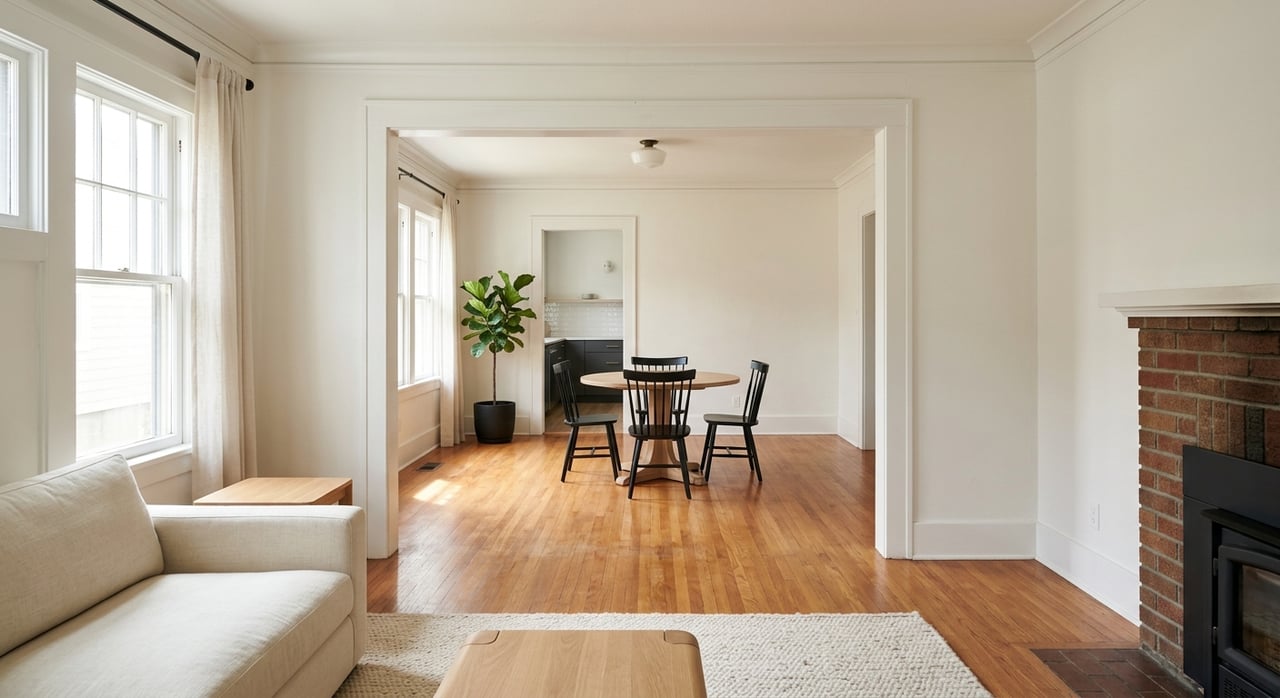
Bungalows often have more open layouts than you might expect in an older home. Instead of a very formal room-by-room design, you may find living and dining spaces that flow together more naturally.
Lower rooflines and simpler shapes
Many bungalow homes have low-pitched roofs, wide eaves, and visible architectural details like exposed rafters or braces. A common version is the side-gable bungalow, where the porch and entry sit under or extend from the main roofline.
Smaller bedrooms and storage limits
Because these homes were built in a different era, bedroom sizes, closet space, and storage can feel tighter than what you see in many newer homes. That does not make them a poor fit. It just means you should think carefully about how you live day to day.
What to look for beyond the charm
Original character can be wonderful, but systems and maintenance should carry just as much weight as paint colors and porch columns. When you evaluate an older Shandon home, focus on how the house functions first.
A standard home inspection typically covers the heating system, central air conditioning, plumbing, electrical system, roof, attic and visible insulation, windows and doors, and the foundation or basement. That inspection is meant to give you an objective look at the home’s condition and likely repairs. It is not a pass-or-fail test.
Roof and drainage
Older homes can have roof age, flashing wear, or drainage issues that are not obvious from the curb. Ask questions about the roof’s age, past repairs, and how water moves away from the house.
HVAC and energy efficiency
Heating and cooling updates can make a major difference in comfort and monthly operating costs. Older, less efficient systems can cost more to run, and leaky windows, doors, and ducts can let conditioned air escape.
Insulation and weatherstripping also matter. In a renovated bungalow, some of the most valuable improvements are the ones that help the home feel more comfortable and reliable without stripping away its original character.
Plumbing and electrical
With an older house, plumbing and electrical updates deserve close attention. Even when a home looks beautifully updated on the surface, it is worth confirming what was actually improved behind the walls and below the sinks.
Windows, doors, and foundation
Windows and doors affect comfort, efficiency, and maintenance. The foundation also deserves a careful review, especially in an older home where small issues can become larger repairs over time.
Updates that usually add the most value
Not every renovation has the same payoff when you are buying an older bungalow. In many cases, the most meaningful updates are the practical ones.
Here are a few upgrades that often matter most:
- Updated HVAC for better comfort and efficiency
- Improved insulation and weatherstripping
- Reduced air leaks around windows, doors, and ducts
- Roof repairs or replacement when needed
- Electrical and plumbing improvements for reliability
Cosmetic finishes are nice, but reliable systems usually have a bigger impact on how the home lives every day. If you are comparing two similar homes, the one with stronger core updates may be the better long-term choice.
Know the overlay rules before planning changes
This is one of the most important steps for Shandon buyers. Not every property is subject to the same rules, and you should never assume that all homes in Shandon are treated the same way.
The City of Columbia lists a Shandon Community Character Area, and nearby Old Shandon/Lower Waverly is a separate protection area. Community character areas are not the same as historic districts, but review can still apply for demolition and new construction on newly subdivided lots.
Why the exact parcel matters
Rules can vary based on the specific overlay tied to the parcel. That means a home’s location on the map can affect what kind of exterior work may need review.
Old Shandon/Lower Waverly review basics
In Protection Area A, review applies to new construction, additions or enclosures, exterior changes, certain fences and walls, and demolition or relocation. In Protection Area B, review is more limited and focuses on items like new construction, additions over 500 square feet, and some fences or walls.
The city also notes that routine maintenance with matching materials, painting and color, interior work, and work not visible from the public right-of-way generally do not require review in Area A. If you already know you may want to add a porch feature, build a detached garage, or expand the house later, check those rules early.
Ask before design work starts
The city advises buyers and owners to confirm the parcel on the interactive map and consult preservation staff first. That is especially important before you spend time or money on plans for additions, exterior changes, fences, or accessory structures.
Lead paint is an important older-home issue
Because many homes in this part of Shandon were built before 1940, lead-based paint is an important topic. The EPA says 87% of homes built before 1940 contain some lead-based paint.
Before the sale or lease of most housing built before 1978, sellers and landlords must disclose known lead information. If you plan future renovation work that disturbs painted surfaces, larger projects may require certified lead-safe work practices.
This does not mean you should avoid older homes. It means you should go in informed, ask the right questions, and plan responsibly for any future work.
Your next steps when buying a Shandon bungalow
If you are serious about buying in Shandon, a clear process can help you move forward with confidence. Older homes reward buyers who slow down and look closely.
Step 1: Match the layout to your lifestyle
Think beyond charm and picture your daily routine. Make sure the bedroom sizes, storage, living flow, and porch space fit how you actually want to live.
Step 2: Prioritize systems during due diligence
Pay close attention to the roof, HVAC, plumbing, electrical, insulation, windows, doors, and foundation. These items often matter more than stylish finishes.
Step 3: Verify parcel-specific overlay details
Check whether the property falls within the Shandon Community Character Area or the Old Shandon/Lower Waverly protection area. If you may want to make exterior changes later, confirm what review may apply before you buy.
Step 4: Plan for lead-safe decisions
If the home was built before 1978, ask about lead disclosures and keep future renovation work in mind. This is especially important in homes dating to the early 1900s.
Step 5: File for legal residence after closing
If the home will be your primary residence, file for Richland County legal residence after closing. The county says this lowers the assessment ratio from 6% to 4% and exempts school operating taxes for qualifying owner-occupants.
Buying a Shandon bungalow can be a wonderful move when you understand both the character and the responsibilities that come with an older home. With the right guidance, you can enjoy the charm, ask smart questions, and make confident decisions from showing to closing. If you want help evaluating homes in Shandon or planning your next move in the Greater Columbia area, reach out to Heather Shuler to schedule a consultation.
FAQs
What does a Shandon bungalow layout usually look like?
- A Shandon bungalow often has a compact one- or one-and-a-half-story layout, a large front porch, open main living spaces, and smaller bedrooms or closets than many newer homes.
What should a buyer inspect first in an older Shandon home?
- In an older Shandon home, focus first on the roof, HVAC, plumbing, electrical, attic and visible insulation, windows, doors, and foundation, since these are core systems covered in a standard home inspection.
Are all Shandon homes under the same preservation rules?
- No. Shandon includes a community character overlay, and nearby Old Shandon/Lower Waverly is a separate protection area, so the exact parcel must be checked individually.
Do exterior changes in Old Shandon need review?
- Some do. Depending on whether the property is in Protection Area A or B, review may apply to projects like additions, exterior changes, new construction, fences, walls, or demolition.
What should buyers know about lead paint in older Shandon houses?
- Many older homes may contain lead-based paint, especially homes built before 1940, so buyers should review required disclosures and plan for lead-safe work practices if future renovations disturb painted surfaces.
What should an owner do after closing on a primary residence in Richland County?
- If the Shandon home will be your primary residence, file for Richland County legal residence so the property can be classified at the 4% owner-occupied assessment ratio.
